Finishing a house feels like the end of the journey, but there is one more document that many Kenyan homeowners forget: the occupation certificate. An occupation certificate in Kenya is the county government’s confirmation that a building was completed in line with the approved plans and is fit to be lived in or used. Without it, you can run into problems when you sell, take a mortgage, insure the building or deal with the county later.
This guide explains what the certificate is, why it matters, and how to get it with as little delay as possible. It is part of our main guide to all permits required before building in Kenya, which covers the approvals you need before construction starts.
Building or finishing a house and unsure about approvals? Our team can guide you from plans to occupation: WhatsApp 0789 217 685
What is an occupation certificate in Kenya?
Building approval happens in two halves. Before construction, the county approves your drawings and issues a building permit. After construction, the county inspects the finished building and, if it matches the approved plans and meets safety requirements, issues the occupation certificate (sometimes called a certificate of occupation or occupancy). In other words, the permit says “you may build this”, and the occupation certificate says “what you built is acceptable to use”.
Development control is a county function. For example, the Kisumu County Department of Lands, Physical Planning, Housing and Urban Development lists development control and compliance among its mandates. Each county sets its own forms, fees and timelines, so always confirm the current procedure with your county’s planning or building department.
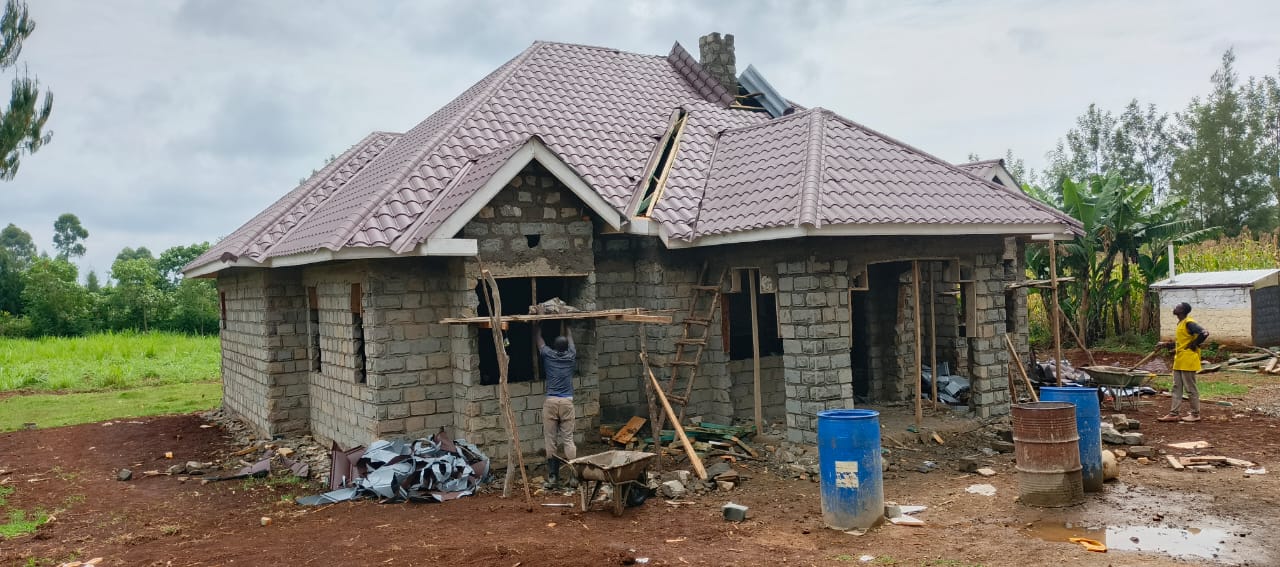
Why the occupation certificate matters
- Mortgages and bank loans. Lenders and their valuers often ask for approved plans and, for completed houses, the occupation certificate. See our guide to property valuation for a mortgage in Kenya for the full document list.
- Selling the property. A careful buyer, or the buyer’s lawyer, will ask whether the building was approved and certified. Missing paperwork can lower the price or stall the sale.
- Rental and commercial use. If you are letting units, or a bank is financing a rental block, proof that the building is fit for occupation protects you and your tenants.
- Insurance. An insurer may ask questions about approvals if you make a claim.
- Avoiding enforcement. Counties can take action against buildings that were occupied or altered without approval. Getting the certificate closes the file.
The occupation certificate starts on day one
The easiest certificates are the ones planned from the beginning. The county will compare the finished building with the approved plans, so the three biggest rules are:
- Build what was approved. If you want to add a room, change the roof or move walls, get the revised drawings approved first. Our step-by-step building approval process guide explains how approvals work.
- Keep the inspections on record. Counties may inspect at key stages such as setting out, foundations and structural works. Keep copies of inspection records and any notices.
- Keep the paperwork together. Approval letter, stamped drawings, structural designs, contractor details and any NEMA documents should live in one file. If your project needs an environmental licence, see our guide to the NEMA approval process for construction.
Starting from a complete, construction-ready drawing set makes all of this simpler. For example, a ready design such as our 4-bedroom bungalow house design can be adapted to your plot and submitted for approval, so the house you build is the house on the approved plans.
How to get an occupation certificate: step by step
The exact steps vary between counties, and some counties (Nairobi among them) handle development applications online. The general sequence is:
- Complete the building. Finishes, drainage, sanitation and electrical work should be done, and the site cleared.
- Prepare the documents (see the checklist below).
- Apply to the county through its planning or building department, or its online portal where one exists, and pay the applicable fee.
- Final inspection. County officers inspect the building and compare it with the approved drawings. They may check structure, drainage, sanitation, ventilation, fire safety and access.
- Fix any defects listed by the inspectors, then request a re-inspection.
- Collect the certificate and keep certified copies with your title documents.
Document checklist
Counties set their own lists, but you should expect to need most of the following:
- Building approval letter and approved, stamped drawings
- Copy of the title deed or lease, and proof of land rates payment where applicable
- Structural engineer’s completion or compliance certificate
- Details of the contractor, who should be registered with the National Construction Authority (established under the NCA Act No. 41 of 2011); see our guide to NCA registration requirements
- Records of stage inspections
- Environmental (NEMA) documents, if your project required them
- Fire safety documents for larger or commercial buildings, where the county asks for them
- Owner’s ID and KRA PIN copies
Common reasons applications are delayed or refused
- The building differs from the approved plans – an extra floor, a converted garage, a bigger footprint or a changed roof.
- No building approval in the first place. This is the hardest case; the owner may need to regularise the building with as-built drawings before anything else.
- Missing engineer’s sign-off because the structural engineer was not involved during construction.
- Drainage and sanitation problems, such as a septic tank too close to a boundary or no proper connection to a sewer where one exists.
- Incomplete works, for example missing balustrades on stairs and balconies.
- Unpaid fees or land rates.

What if you already live in a house without one?
Many Kenyan homes, especially those built in phases over several years, were occupied without a certificate. If that is your situation:
- Find the original approval letter and stamped plans. If you cannot, ask the county whether it has a record.
- Have an architect or engineer compare the house with the approved plans and list any differences.
- Where the house differs, prepare as-built drawings and ask the county how to regularise them.
- Then apply for the occupation certificate as above.
It is far cheaper to sort this out before you sell, refinance or extend than in the middle of a transaction.
Questions to ask your contractor before you build
- Will you build exactly to the approved drawings, and how will changes be approved?
- Who arranges the county stage inspections?
- Will your structural engineer sign a completion certificate?
- Is getting the occupation certificate part of your scope of work?
A design and build contractor that handles drawings, approvals and construction can carry the process all the way to the occupation certificate. Read how this works in our guide to design and build in Kenya.
Need plans, approvals or help finishing your house?
Tell us the town, what stage your house is at and what paperwork you already have. We will advise on approvals, drawings and construction, and give you a free quote.
Or call 0789 217 685 / 0724 481 087.



One thought on “Occupation Certificate in Kenya: What It Is, Why You Need It and How to Get It (2026)”